For seven months, the Center for Tomorrow's Leaders (CTL) asked people across the state about the pressures they face, what they fear Hawaiʻi could lose, and what needs to change to build a better future.
The following editorial was originally published in the Honolulu Star-Advertiser on Sunday, March 1st as part of the “Raise Your Hand” column in the Insight section.
Why Hawaiʻi’s Future Depends on the Middle
By Katie Chang
Watching CBS’s recent 30th-anniversary special of Everybody Loves Raymond, I was
struck by one simple closing line from creator Phil Rosenthal: “We need a bigger
table”.
When it comes to leadership in Hawaii, we definitely need a bigger table.
Today marks the 10th anniversary of RAISE YOUR HAND, a student column we built
around that very idea. Center for Tomorrow’s Leaders, the nonprofit that facilitates this
column, has worked tirelessly to bring diverse, young voices into the editorial pages of
the Star Advertiser. We’ve welcomed writers from every island and 32 high schools.
These writers represent the start of something that Hawaii desperately needs:
activating the massive middle.
Hawaii’s institutions seem to cater to everyone except those in the middle — those of
us who go to work and school every day, who are sensible in our expectations of
government, and want to live according to local values.
The middle is the easily overlooked majority. But the strength of this group must hold,
and their voices must be heard.
This group isn’t often “at the table” because discourse can be dominated by the
extremes, often funded by entrenched special interest groups. Public policy messaging
is often filled with obtuse jargon, inaccessible to ordinary people. Ultimately, many
people don’t have time to engage because they are trying to make ends meet. Or
perhaps it’s just easier to go along to get along.
But I still have my money on the people of Hawaii and the young leaders of CTL who
populate the vast center.
How have we shown through a decade of Raise Your Hand, the way to ignite this
group’s potential?
First, we take a proactive approach to finding writers for this column. One of the places
we found writers is from CTL’s high school program, which teaches leadership to
1,000 students a year in partnership with the Hawaii Department of Education. They
bring the range of experiences and perspectives needed to build a Hawaii that
functions for everyone. This work takes time and effort — CTL staff travel 22,000
miles annually to reach students. But it is necessary. We can’t build diverse leader
pools without going to find them.
Second, great op-ed writing flows from great thinking. Our curriculum encourages
critical thinking. The young leaders gain confidence in asking good questions,
conducting thorough research, and constructing “steel man” counterarguments. With
the rise of artificial intelligence, these skills will ironically become even more
important. We’re moving quickly to strengthen this training, and the entire state should
prioritize it as well.
Third, we have demonstrated that we welcome writers from both sides of the political
aisle and from both sides of any controversial issue. Simply put, both Trump and Harris
supporters were welcome to express their viewpoint. We believe Hawaii is more
politically diverse than election results alone might suggest. Our alumni want to fight
polarization, and we all share a responsibility to turn disagreements into constructive,
lively dialogue.
CTL exists to identify and train trusted young leaders across the state who represent
real community needs with integrity, not self-interest. This spring, CTL alumni will
travel across Hawaii on a listening tour, connecting with neighbors, family, friends, and
local communities. From that feedback, they will build on Raise Your Hand, turning
carefully considered ideas into alumni-led projects that tackle Hawaii’s most
intractable issues.
We’re just one non-profit. But maybe these steps, together with your initiatives, will
yield results that Hawaii has been dreaming of for decades — affordable housing, a
competitive leadership landscape, and a shared vision for the future.
We are ready for a bigger table. Please pull up a chair.
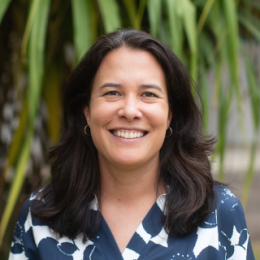
Katie Chang is the Executive Director of the Center for Tomorrow’s Leaders.
Related Articles
Respecting this constitutional structure is especially critical in matters of war and foreign policy. Our nation cannot call itself a democracy when Congress, the “people’s branch,” is abdicating its war-making authority to the president while lives are at stake and economies are faltering.
If you are like most people, you probably think animal testing has already been outlawed. With so many companies marketing their products as “cruelty-free,” it’s easy to assume the practice is a relic of the past. But the reality is that animal testing remains incredibly common.
The mainstream climate movement has become too broad, too corporate, and too driven by greed.