Respecting this constitutional structure is especially critical in matters of war and foreign policy. Our nation cannot call itself a democracy when Congress, the “people’s branch,” is abdicating its war-making authority to the president while lives are at stake and economies are faltering.
The following editorial was originally published in the Honolulu Star-Advertiser on Sunday, February 7, 2021 as part of the "Raise Your Hand" column in the Insights section.
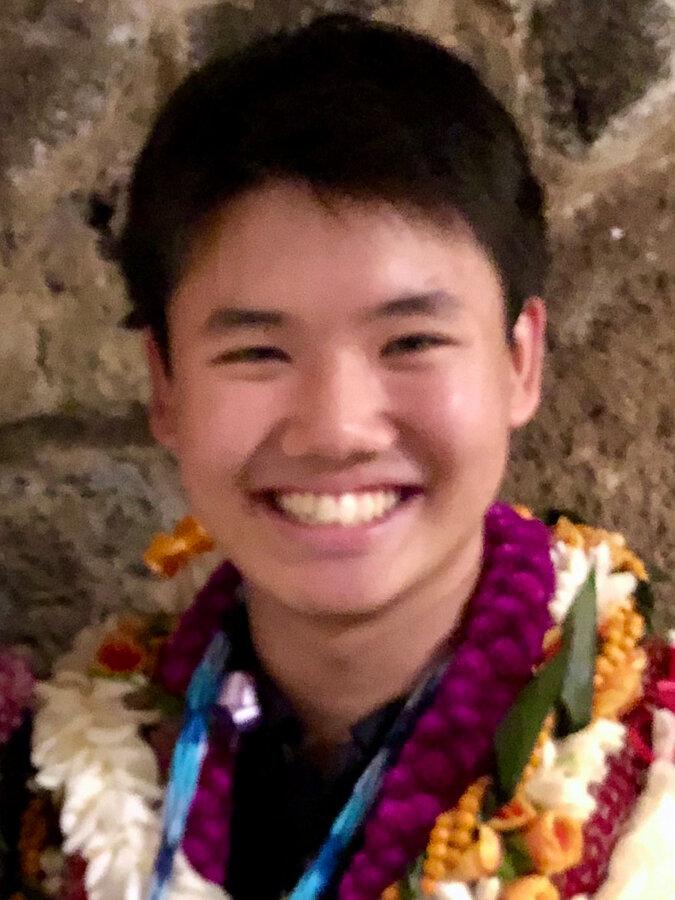
BY: ELIJAH LEE
University of Hawaii at Manoa ℅ 2024, Kamehameha Schools ℅ 2020
“If freedom of speech is taken away, then dumb and silent we may be led, like sheep to the slaughter.” In 1783, five years before the American Constitution, and eight years before the Bill of Rights, George Washington spoke of a freedom of speech that did not rely on law or legal right. Freedom of speech, Washington knew, depended on a society that valued open dialogue and embraced differing perspectives, a society that has become increasingly threatened in recent years.
As private entities, “big tech” companies such as Amazon, Apple, Facebook, Google, and Twitter have every right to exercise their discretion in banning whomever they please. The right to refuse service is, in itself, a First Amendment right. However, the legality of their actions must not be conflated with moral legitimacy.
By banning a sitting President, these multi-billion dollar organizations sent a unanimous and unequivocal declaration of how “free speech” will be conducted on their incredibly influential platforms. It was a message of intolerance towards politically incongruent viewpoints.
To anyone who read then-President Trump’s tweets and posts on January 6, 2021, it is clear that the President offered provocative rhetoric but no explicit incitement. He did, as many of his opponents have, raise tempers and contribute to a narrative that was later used to justify senseless violence. It was nothing new to Washington’s war of words. That is until he got banned, while so many others, equally guilty, did not.
In May 2020, Iranian Ayatollah Khamenei tweeted that, “The only remedy until the removal of the Zionist regime is firm, armed resistance.” This, of course, was not unusual for the Ayatollah, who ordered the killing of over 1,500 peaceful protestors in late 2019. Yet, Twitter has neither removed the tweet nor banned his account.
Therefore, the true warrant for President Trump’s removal was not provocative rhetoric, for the consistent enforcement of such a standard would result in the removal of countless politicians and celebrities, all of whom continue to enjoy access to their social media platforms. Rather, it was opposition to his politics that disqualified him from these major platforms.
This demonstration of political censorship should offend all Americans, even those who may fervently oppose President Trump and criticize his January 6th words and actions. As President Kennedy warned, “The rights of every man are diminished when the rights of one man are threatened.” It may not seem a bad thing when the voice banned today is one we do not want to hear, but one day, it may be our voice.
There may be no better illustration of this creeping threat than in China. While China’s Constitution alleges that its citizens “enjoy freedom of speech, of the press, of assembly...”, the reality is entirely different. China has a history of censoring political opposition, quelling peaceful protests, promulgating propaganda, and continues these efforts to this day. As in China’s example, the legal provision of freedom of speech becomes irrelevant if the society, that is the leaders and facilitators of the society, are not committed to the same protections. Unlike the oppressed Chinese public, we are free to speak against these efforts, and we must before it’s too late.
In an era when America is severely divided and polarized, we must find ways to open dialogue, not close it. Banning or restricting speech, when conducted by private corporations, may be legal, but it poses an intolerable threat to our fundamental values. Freedom of speech must not only be protected by words on a centuries-old parchment but by the personal conviction of every American citizen to demand nothing less.
Related Articles
If you are like most people, you probably think animal testing has already been outlawed. With so many companies marketing their products as “cruelty-free,” it’s easy to assume the practice is a relic of the past. But the reality is that animal testing remains incredibly common.
The mainstream climate movement has become too broad, too corporate, and too driven by greed.
If you ask a high school senior in Hawaii where they are headed for college, their likely answer is somewhere on the mainland. Hawaii is a beautiful place with fresh local food, strong community ties, and a deep sense of ohana found nowhere else. Why, then, would anyone want to leave such a close-knit and peaceful community for somewhere they have never lived before? Simply put, the answer is the lack of good job opportunities.